Celebrating One Truckee River’s 10th Anniversary
Celebrating One Truckee River’s 10th Anniversary
Ten years ago, the One Truckee River Management Plan, Phase 1 was unanimously approved by the City of Reno, the City of Sparks, Washoe County, and the Western Regional Water Commission. It represented the first step towards making our shared vision for the Truckee River a reality and a key moment in the creation of One Truckee River as a nonprofit organization. Today, we continue to work alongside our partners to advance towards the goals laid out in the Management Plan.
To commemorate our 10-year anniversary, we spoke with five women who were instrumental in our organization’s founding and growth – to reflect on what we’ve accomplished, why our work is so important, and what’s next for the Truckee River in Nevada.
Keep reading to hear from a few of our Partnership Council entities:
· Christi Cakiroglu: former Executive Director of Keep Truckee Meadows Beautiful, former OTR Board Member, and owner of CC Consulting Solutions
· Alicia Reban: Executive Director of Nevada Land Trust and OTR’s Board Treasurer
· Kara Steeland: Senior Hydrologist and Watershed Coordinator at Truckee Meadows Water Authority (an OTR funder)
· Birgit Widegren: Water Management Planner at Western Regional Water Commission (an OTR funder) and former OTR Board Member.
· Danielle Henderson: Natural Resource Manager at Truckee River Flood Management Authority and OTR’s Board President
Recognizing: We Share One Truckee River
It all started with a realization. As Executive Director of Keep Truckee Meadows Beautiful (KTMB), Christi Cakiroglu had seen a need along the river. So, starting in 2004, KTMB had begun coordinating Truckee River cleanups year after year. After nearly a decade of work, she noticed something problematic. “The amount of trash we were collecting every year was increasing, but it wasn’t in relation to an increase in volunteers,” she explained. In 2013, when she received a phone call from an anonymous donor, she saw an opportunity – and went to her Board of Directors. “The decision was made that instead of doing additional cleanups, we needed to look at the systemic issues we were facing in dealing with the river, and why it was continuing to be such a mess.”
This began a nearly year-long journey. Cakiroglu reached out to local, state, and federal agencies – and realized that part of the problem was that each organization had a very specific stake in the river. While everyone agreed the river needed help, no one was claiming ownership over the Truckee River overall or coordinating efforts along it. Much like her experience coordinating KTMB’s Illegal Dumping Task Force, Cakiroglu realized that everyone was working in silos, without a master plan.
She reached out to Alicia Reban, Executive Director of Nevada Land Trust (NLT). “I realized that putting together the huge coalition that the Truckee River deserved was not something KTMB could do on our own with only three full-time staff,” reminisces Cakiroglu. “I knew this was going to be a heavy lift and partnering with NLT was the next best step and a natural partnership, since we also shared office space.”
Alicia Reban, Executive Director of NLT, shares, “Lots of good work was being done by agencies and organizations independently, but there wasn’t a Truckee River Watershed Council in Nevada to connect and leverage that work. As the first independent land trust in the state of Nevada, protection of the Truckee River was always been part of the Nevada Land Trust’s focus. At the time of OTR’s creation, we had been doing land acquisitions and other conservation work along the river for many years.” Like Cakiroglu, Reban saw the need for a much broader collaboration between agencies and organizations who all cared about the river. “We’re all stronger together,” she concludes.
Building a Coalition
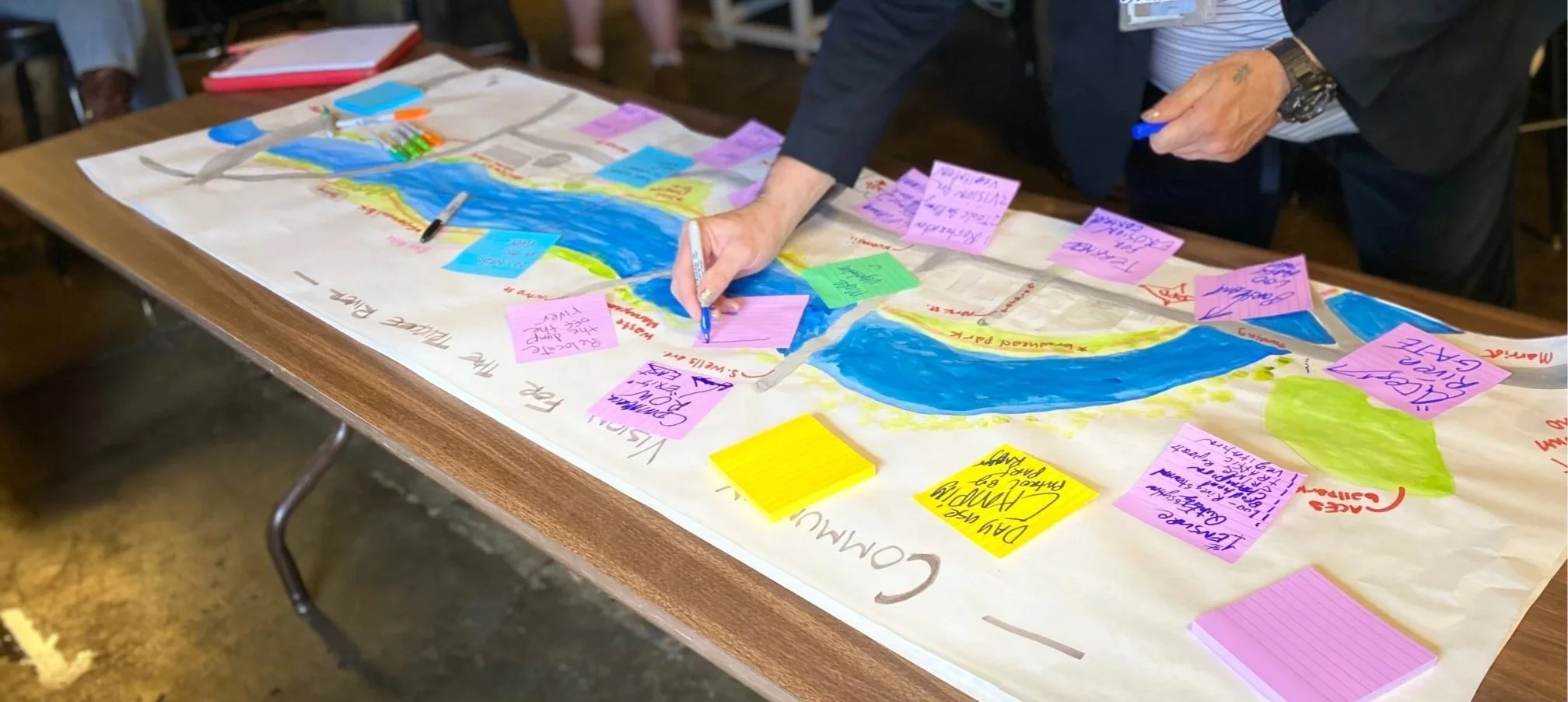
From here, the One Truckee River Initiative was born. Just an initiative, to start. In May 2015, KTMB and NLT identified and convened their core planning team and brought together an unprecedented stakeholder group. It featured leadership and expertise beyond the environmental sector, bringing together content experts in everything from social services to arts and culture, public safety to indigenous voices. “To look at the issues the Truckee River faces holistically, we needed to bring a lot of different folks and perspectives to the table. It was exciting to listen and learn, and to provide a forum where we could share knowledge and understanding, pool resources and communicate opportunities,” Reban recollects. “We asked, ‘how can we help the river together?’”
From her earliest involvement, Birgit Widegren was impressed by the breadth of OTR’s coalition. At the time, she was the Nonpoint Source Branch Supervisor at Nevada Division of Environmental Protection – and one of her main focuses was leading collaborative efforts for water quality improvement throughout the state. She participated in the planning process as a water quality expert and tells us, “My viewpoint was opened very quickly. The effort wasn’t just about water quality, it was addressing the needs and issues associated with the homeless population along the river, as well as safety concerns. There were sheriffs there, and representatives from the shelters. This was a huge effort addressing all kinds of issues for the Truckee River. I was impressed.”
Kara Steeland, Senior Hydrologist and Watershed Coordinator at Truckee Meadows Water Authority (TMWA) recognizes “TMWA got involved in the beginning as a source water protection measure. We were taking a proactive approach to protect water at the source of supply, instead of responding to future contamination or degradation. By getting involved with OTR we were able to prioritize actions in the urban corridor that protect our region’s drinking water.”
Creating & Adopting a Plan
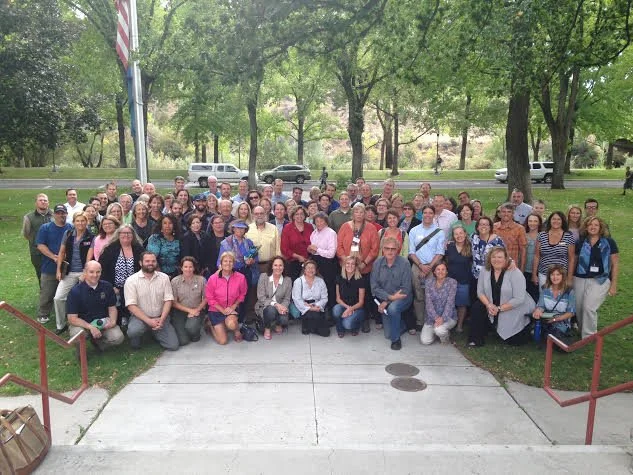
The Core Planning Team identified nine emerging areas connected to the Truckee River: water quality, social issues, stewardship, ecosystem, quality of life, public safety, funding, recreation, and education. These became the anchors for a successful stakeholder forum held in September 2015, where 130+ representatives from just as many agencies attended a full day gathering to discuss the top concerns, challenges, opportunities, and solutions for each area. Together, they developed a list of technical experts and provided feedback on existing programs, initiatives, and services. Over the next year, goals, priorities, and action items were created for each emerging area – and the One Truckee River Management Plan was drafted.
Four main goals came out of the plan:
1. Ensure and protect water quality and ecosystem health in the Truckee River.
2. Create and sustain a safe, beautiful and accessible river connecting people and places.
3. Build an aware and engaged community that protects and cares for the river.
4. Ensure the measurable, sustainable and collaborative management of the river for today and into the future.
It also became clear that successful progress towards these goals would require a strong coalition of partners working together. The Truckee River’s needs were too great for a single agency or nonprofit to accomplish them on their own.
Reban reflects, “We felt very strongly that we didn’t want another plan on a shelf, but a living, working document. It needed some teeth.” Cakiroglu wholeheartedly agreed.
The best way to achieve that was to seek approval by Washoe County, City of Sparks, City of Reno, and Western Regional Water Commission. So, Cakiroglu tells us, “We met one-on-one with commissioners and city council members and talked about this vision for the heart of our community.”
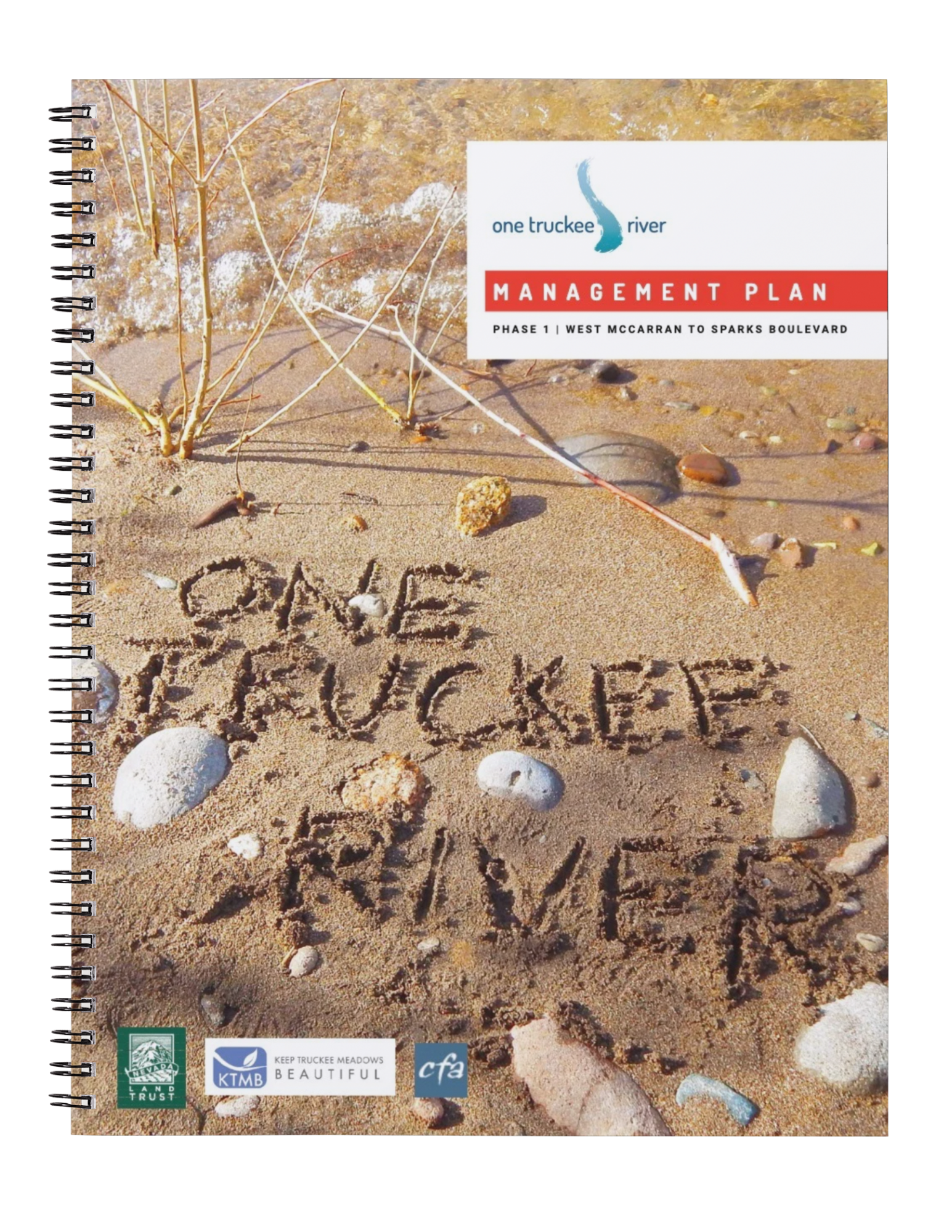
In September 2016, the Truckee River Management Plan was unanimously adopted. “To have all four of those entities unanimously agree was a major milestone,” Cakiroglu shares, “I still get goosebumps thinking about that. It was a really exciting time.”

Following Through & Taking Action
After the Truckee River Management Plan was completed and approved, the Partnership Council continued to meet (and still does today, bi-annually), working to address the nine priority action items it identified in 2017. As the initiative moved from planning to action, NLT served as the fiscal agent for One Truckee River. With NLT as a key OTR partner, we began tackling on-the-ground projects – creating a multi-jurisdictional signage plan along the Truckee River (with maps, directions, and interpretive signage for both on-river and river path recreationists) and fundraising and administrating coordinated vegetation management planning efforts.
It was around this time that One Truckee River started on its path towards independence, Reban remembers. And it was time to establish leadership for OTR’s efforts. Widegren was part of the committee that interviewed Iris Jehle-Peppard, our Executive Director, in 2018. Quickly, Jehle-Peppard set out to tackle one of OTR’s nine priority goals, which had urgent water quality repercussions: ensuring adequate public restroom access along the Truckee River. Both Widegren and Steeland pinpoint this project as an early example of the strength of working together in partnership, and as a coalition.
For the restroom project, Steeland shares, “It was incredible to be able to point to this Management Plan that had been approved by the regional entities and say ‘look, we all agreed this is a good idea, let’s move forward!’” After the restrooms were installed, Widegren was especially impressed to see OTR “working with a gentleman who previously experienced homelessness, as an ambassador to the homeless community, and helping connect people with services” while maintaining the three new public restrooms and “felt proud that OTR was taking a humane approach.”
Also during this period, One Truckee River transitioned from being fiscally sponsored by NLT to joining forces with the Truckee River Foundation, an organization with a similar mission, in 2020. The 501(c)3 nonprofit, Truckee River Foundation, was founded in 2005 by a small group of four committed Truckee Meadows residents, building off the success of helping create the Wingfield Park Whitewater Park.
Growing Our Programs
“Over time, the One Truckee River partnership has evolved to actually put its plan into action and get tangible projects done in the community that can make real improvements in water quality, multi-beneficial projects,” according to Steeland. In recent years, we’ve supported diverse and high functioning ecosystems along the river through urban riverbank repair projects, combining restorative vegetation management with opportunities for crew members facing barriers to employment, and connecting with the community through River-Friendly yards communications work. Kara notes how many projects have spoken to overlapping interests and goals, including health and human services, environmental education, and water quality improvements.
One example? The One Truckee River Workforce Program. Since 2024, we’ve been pairing restorative vegetation management with education, on-the-job training, and certification opportunities for crew members, all individuals facing barriers to employment. We’ve partnered with Reno Initiative for Shelter and Equality (RISE) and Washoe County’s Crossroads program to provide our crew with professional experience and certifications in forestry, river ecosystems, and landscaping – all while improving the tree canopy in Downtown Reno, benefiting local wildlife, increasing water quality protections, and improving recreational opportunities for residents and visitors. The work is made possible through NV Division of Forestry and River Network funding
Widegren, who became the Water Management Planner for the Western Regional Water Commission in 2022, shares that she’s especially motivated to see One Truckee River increase its riverbank repair and coordinated vegetation management efforts. “At the moment, the WRWC is funding planning for OTR’s Idlewild Habitat and Riverbank Stabilization Project, and I’m excited about that. We also fund River-Friendly Living and it’s a great educational component.” She appreciates seeing growing public engagement with content about the Truckee River watershed through both online and in-person participation, signaling that residents want to help protect and improve it.
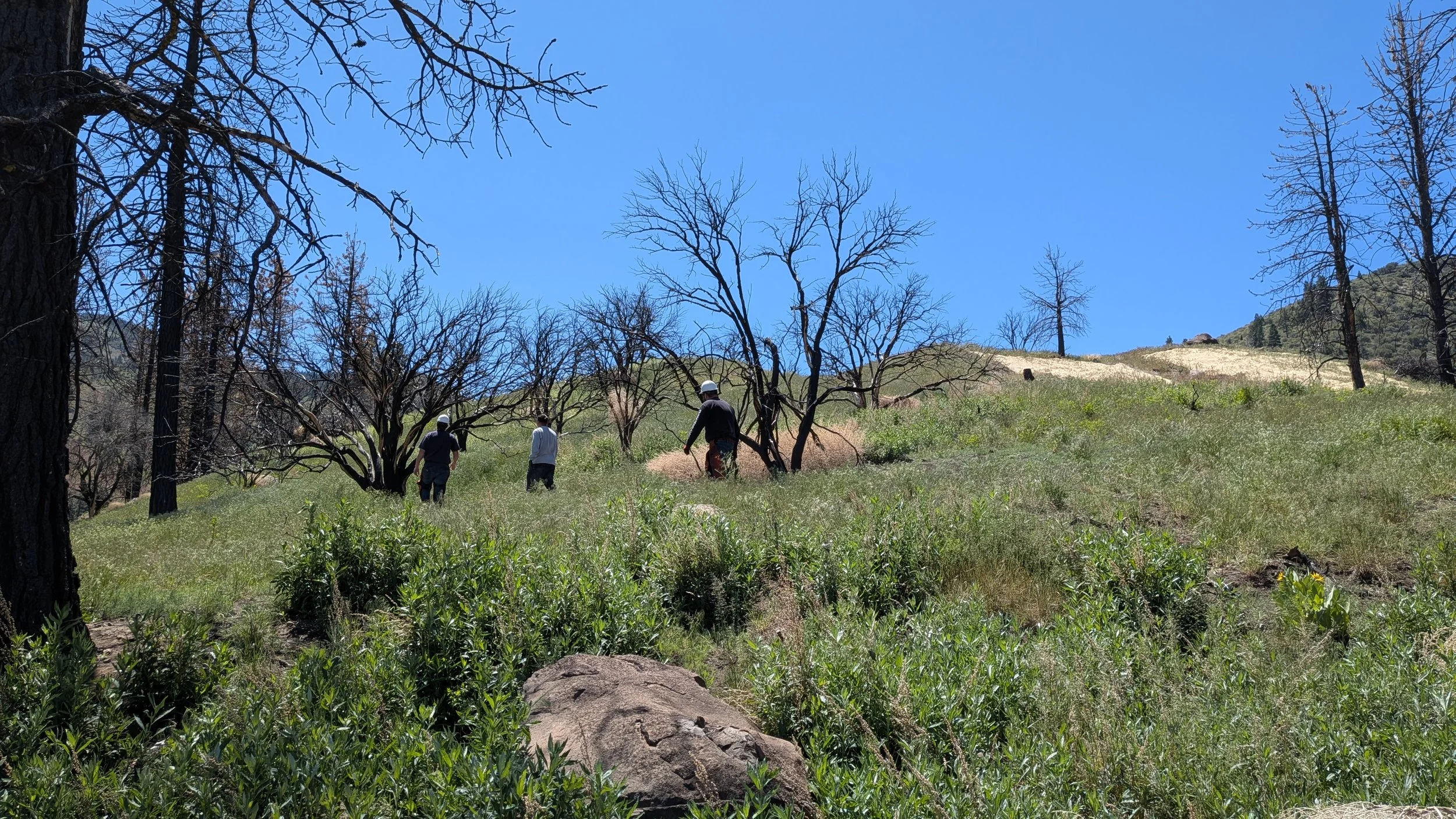
Beyond following the priorities of the plan, in recent years OTR has been able to respond more organically to local needs that come about. In 2024, the Gold Ranch Fire burned for over a mile along the Truckee River’s banks in Verdi, consuming about 650 acres of steep, adjacent forests and sage lands. Because this included both privately and publicly owned land, it became clear that while the Forest Service would be a part of the restoration effort, it could not lead all of it. As a nonprofit, OTR had the ability to apply for and receive funding from NDEP (an OTR Partnership Member) to implement and support that much-needed coordination.
Steeland was excited to see OTR lead collaboration and fundraising at Gold Ranch, bringing together 8-10 different partnering agencies to restore riverside lands and moving beyond the written plan to get the work done. She shares, “I think the power of OTR is in bringing together all these really diverse groups that are sometimes siloed into their own roles, allowing them to work on projects that meet multiple goals benefiting the community.” She appreciates seeing the riverbanks in a better state, with native vegetation and erosion control measures that will bring significant benefits for the Truckee’s ecological health.
What’s Next for One Truckee River?
Just thirteen years after the idea of a shared protection of our One Truckee River was born – and ten years after the One Truckee River Management Plan was approved – a lot has already begun to change. We’ve grown from an idea and a need, to a coordinated initiative, to an independent nonprofit organization. We’ve taken the ideas laid out in our One Truckee River Management plan, identified priority goals, and begun to take collaborative action.
Looking to the future, there’s still much work to be done. And we’re excited to be a part of it. In the upcoming year, we’ll begin construction of our riverbank repair project at Brodhead Park (after years of planning and design), start planning for riverbank repair work at Idlewild Park, and embark on a new restoration and public engagement initiative near Alum Creek, a Truckee River tributary in West Reno. We’ll continue our work leading the One Truckee River Partnership Council, connecting with residents and visitors around River-Friendly Living practices, and spreading appreciation for the river flowing through the heart of our community.
For a small nonprofit, that sounds like a lot…because it is!
Our Board of Director’s current Chair, Danielle Henderson, shares, “The Truckee River brings me so much peace, and I encourage each of you to spend time along it, enjoying its sights, sounds, and energies. As Chair, I'm grateful to be part of such a dedicated, passionate, and creative group of people who share my enthusiasm for protecting the Truckee River. Working together over the last decade we've been able to accomplish so much - and I'm excited for the work ahead!”