
Making The Most of Water: Gardening Strategies with Tom Stille
“To me, the joy of gardening is getting out, getting your hands in the soil, getting in contact with nature, and being aware of the wonderful plants, animals, and sunshine we have in our area.”
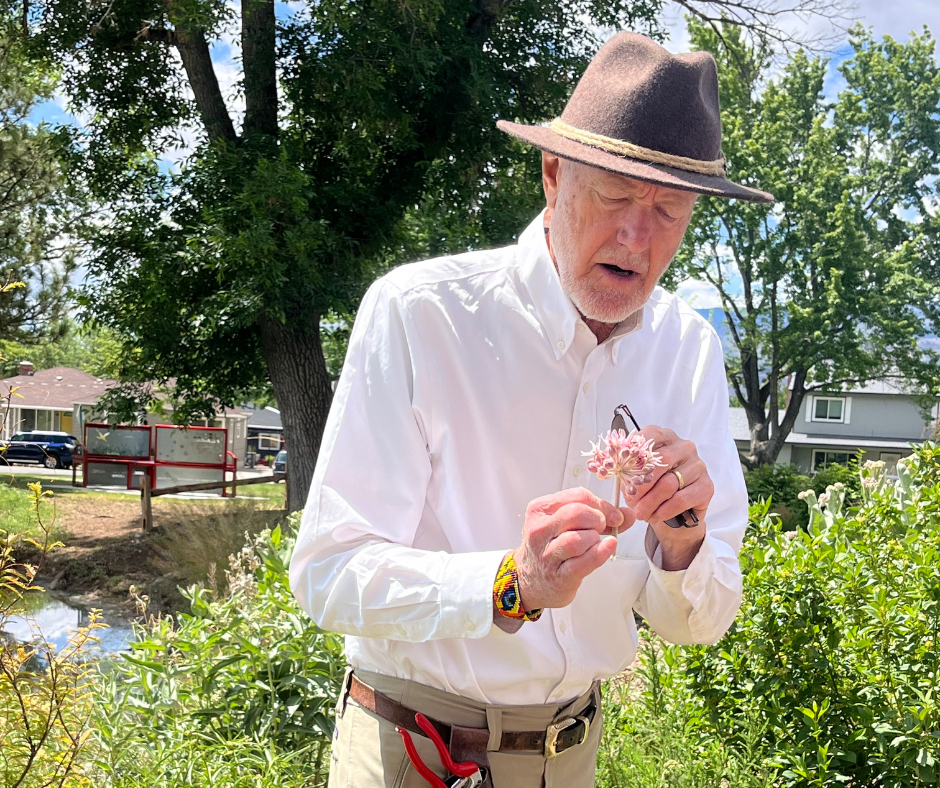
Tom Stille is a local horticulturist, landscape architect and teacher. He’s the owner of River School Farm and a pollinator-friendly and edible garden enthusiast. On May 30th, Stille spoke at One Truckee River’s gardening workshop: Making the Most of Water. Following up on the event, we spoke to him about some of its biggest takeaways – including practical tips for drought-tolerant and River-Friendly gardening we can all implement at home.
Tricks to Gardening in the Desert
As is true in any locale, gardening in Northern Nevada has its challenges. Depending on where you live, your yard’s soils may be rocky near the Truckee River, or clay that’s slow to infiltrate with water in other parts of town. Understanding the soil you’re working with is a key first step to improving your property.
More specific to our high desert environment is our dry climate and summer heat. “On any project, I think it’s really important to emphasize creating shelter,” Stille explains. Adding wind breaks and shade can help many types of plants succeed. When reading plant tags at your local nursery, consider adjusting your interpretation of a generic “half sun” label to match our local growing conditions. After all, a partially sunny spot in Portland might receive less sunlight than a shadier corner here in the Truckee Meadows.
Just as critically, is being mindful of our 35-40 degree temperature fluctuations between daytime highs and evening lows. As gardeners, we most often think about these fluctuations when considering fruiting plants and the challenges of a short frost-free season. However, these fluctuations can also have their advantages – especially when our yards feature sunny, south-facing slopes with winter growing opportunities.
Diving Intro Irrigation
Planting with irrigation needs in mind – and setting up the right irrigation system – is one of the most important ways we can make the most of our region’s eight annual inches of rain.
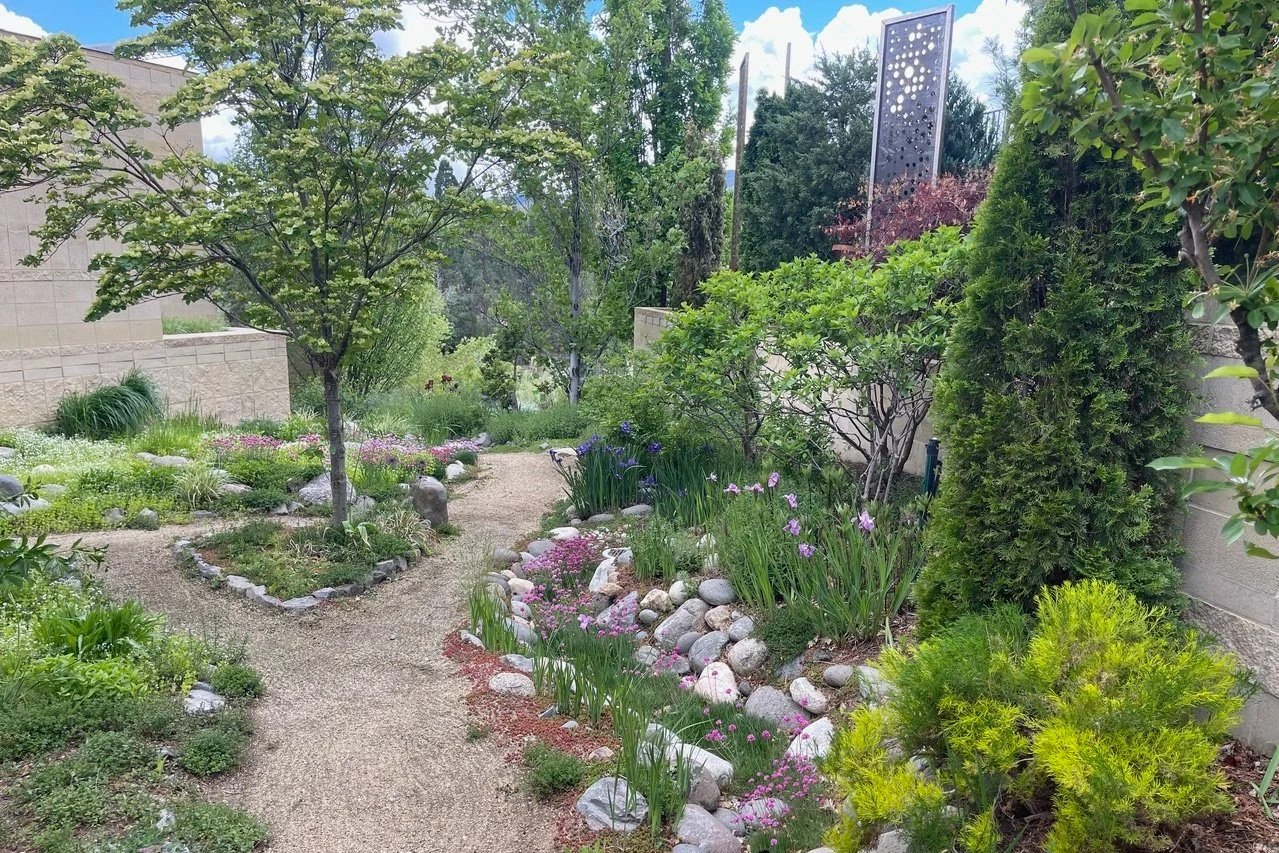
While large lawns are typically watered with sprinklers, when landscaping incorporates smaller grassy zones, underground drip irrigation can be a great alternative. Underground drip is more efficient because it prevents sprinkler water from evaporating and sprinkler overspray from watering sidewalks and other paved areas.
Similarly, setting up a full garden with drip irrigation saves water, allows for more intentional watering, and reduces weeds from popping up between desirable plants. When setting up drip irrigation schedules, Stille explains, everything is customized to the yard, its soil types, its plants, and their specific needs. Typically, he likes to organize his system to include one day a week with deep watering, perhaps 3-4 times as long a watering cycle as other days. Especially when water systems are buried (and not just placed under a thin layer of mulch) he prefers to run drip irrigation for at least a short spurt every day, as this prevents roots from growing into the emitters. (Reminder – while drip irrigation can run daily, sprinkler systems are only allowed to run 3 days a week in our region!) Tom plants with irrigation zones in mind, grouping together plants with higher watering needs.
Thinking about root systems – not just the parts of plants we can see – can also be helpful. When plants are first purchased, removed from their containers, and placed in the ground…the root ball is small. So, the drip system needs to have an emitter right over the root ball to be effective. During the first two weeks, daily watering helps plants to become established. As they become more mature, less frequent watering is needed. As roots spread into the surrounding soil, emitters can successfully be placed halfway between plants, often a couple feet apart for perennials and much farther for trees and shrubs. Depending on the details of your garden, the spacing specifics can vary a lot.
Designing Buffer Strips & Rain Gardens
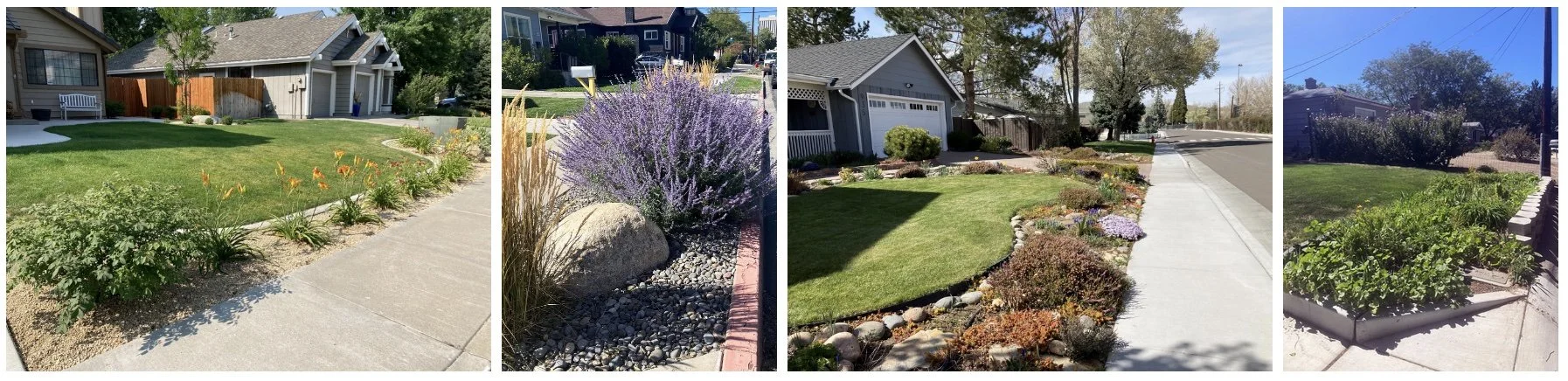
“We want to harvest every drop of water that falls on our property,” Tom declares. “And buffer strips are the way to do that.” A buffer strip is a section of perennial planting, usually a few feet wide, between lawn and pavement. It captures excess sprinkler water, preventing runoff water, fertilizers, and pesticides from flowing down the storm drain and eventually into the Truckee River. Buffer strips can be great places to install pollinator gardens.
Rain gardens (also known as mini meadows) have a funny name for a desert-friendly landscaping feature but can fit well with the way our yards are designed. “When a person buys a new home,” Stilles recognizes, “there’s generally a swale that runs water away from the house and towards the street, and there’s opportunity to develop these dry stream beds.” He likes to see them lined with round river rock and filled with wildflowers and other flowering plants, instead of gravel. Gravel is difficult to weed, inevitably leads to difficult gardening work, and contributes to increasing the heat around our homes. In contrast, filling these swales with plants that appreciate extra water helps make the most of rainfall and watering excess while beautifying your home. If you’re installing your own rain garden, pay attention to soils. Excavating compacted clay soils makes it easier for water to infiltrate and percolate into them.
Examples in Our Community
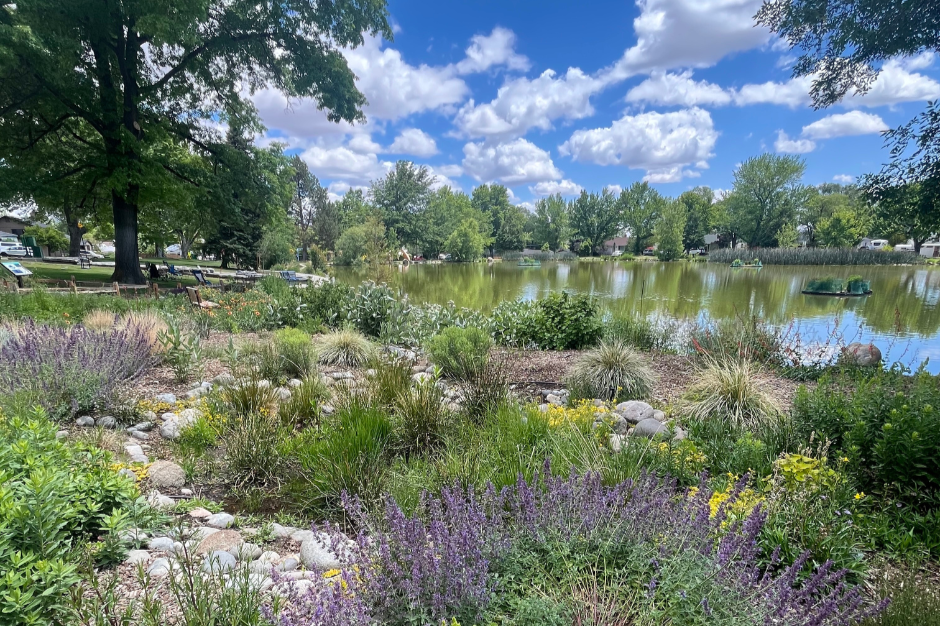
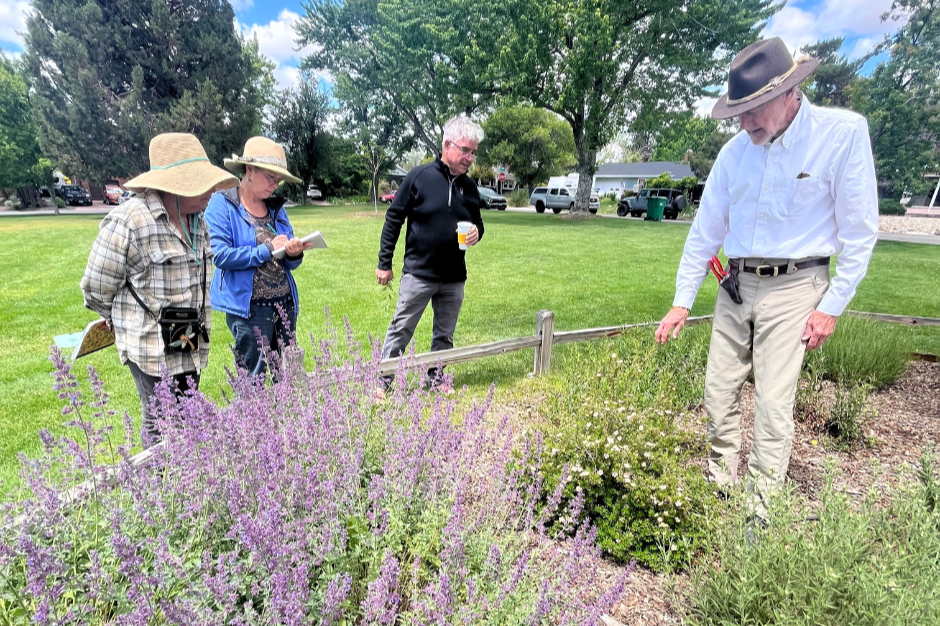
At One Truckee River’s Making the Most of Water workshop, Tom began speaking to attendees in a circle of chairs, under a shaded tree, at the water’s edge in Lake Park. He shared photos with examples of gardens he’s designed, many in private homes. Passionately, he also referenced several examples of his work – featuring details like buffer strips, rain gardens, and pollinator-friendly landscaping – that you can check out without knocking on his clients’ doors. The Nevada Museum of Art Fallen Fruit Garden, Valley Wood Wildlife Gardens, Wilbur D. May Arboretum, and the entrance to the Reno-Tahoe International Airport are all great examples of Tom’s work in public spaces.
Another example? The River-Friendly Living Demonstration Garden in Lake Park! Installed in April 2024 by One Truckee River and our partners, it includes a rain garden, native plants, and informational signage to help visitors better understand and identify the plants and features they’re enjoying. The project’s goals include encouraging and supporting visitors in understanding how to prevent runoff, protecting the Truckee River, while enjoying the diversity of our region’s native and pollinator plants.
Tom Stilles designed and installed the rain garden and path for this project, with the overall garden design and plants selected by Ryan Sharrer, the City of Reno’s Horticulturist. Seedlings were planted by volunteers recruited in partnership with Keep Truckee Meadows Beautiful and Friends of Lake Park.
Tom Stille’s Inspirations
When asked how he got into landscape design, Tom shared “I grew up in a time that people were encouraged to have victory gardens, during the Second World War. We all had big vegetable gardens. In my backyard, we had this great big apple tree and a long grape arbor. We would do all kinds of things with apples. My mother and grandma would make great jam and jelly. So, I grew up really enjoying being in the garden, working with my parents and grandparents.” As he began thinking about what he wanted to do, he learned about horticulture – and decided to study it at Iowa State University. Moving out to Nevada, he became a landscape architect. Today, he owns and manages the River School Farm, located along the Truckee River just downriver of Mayberry Park. From here, he runs his landscaping businesses, farm, event and educational space, and co-housing project.
In his landscaping business, Tom Stilles focuses on edible and pollinator gardens. He enjoys designing, installing, and maintaining gardens that incorporate all kinds of fruits, including apples, pears, gooseberries, raspberries, currants, and serviceberries. He also helps his clients develop raised beds to grow vegetables and herbs. When thinking about edible plants, he considers both flavors people appreciate and plants with benefits for pollinators, birds, and other wildlife. He’s an avid birder and enjoys planting varieties that attract songbirds to his gardens.