Caring for the River, Caring for the People
The First 16 Months with The One Truckee River Workforce Program
In September 2024, we launched the One Truckee River Workforce Program. For just over a year, we’ve been pairing restorative vegetation management efforts along the Truckee River with workforce development, engaging people in our community in recovery. What does that look like? And what have we accomplished in our first 16-months since launching the Program?
Keep reading for a sum-up - season by season - of our accomplishments to-date, what’s in store for the year to come, and how YOU can get involved!

Workforce crew learning about river ecology from Danielle Henderson from the Truckee River Flood Management Authority.
The One Truckee River Approach
While the concerns of marginalized communities are often pitted against or left out of conversations about environmental protections, our strategy is different. With the One Truckee River Workforce Program, we’re creating career building opportunities for individuals facing barriers to employment while conducting restorative vegetation management along the river in Reno. Following the two-mile stretch of the Truckee River from Lake Street to Galletti Way, we’re planting native trees (and other native species) to increase shade and wildlife habitats, removing problematic invasives like Tree of Heaven, updating irrigation systems, protecting mature native trees from beaver damage, and removing dead and declining trees.
Partnering with Reno Initiative For Shelter and Equality (RISE) and the City of Reno, we’re training our crew in tree care, urban and community forestry, and long-term resilience in forest biodiversity. Crew members come to the Program through Crossroads, a Washoe County program that offers a supportive living community, addiction treatment, and wrap-around services. Once individuals reach Crossroads’ “workforce readiness” stage, they can apply to the OTR’s Workforce Program. Within a few months of graduating from Crossroads, our crew members have built their skillsets and are prepared to succeed in the local job market. They’ve gained professional certifications and work experience to kickstart their careers in landscaping and forestry.
The One Truckee River Workforce Program is made possible by grants from the Nevada Division of Forestry and River Network.
Fall 2024
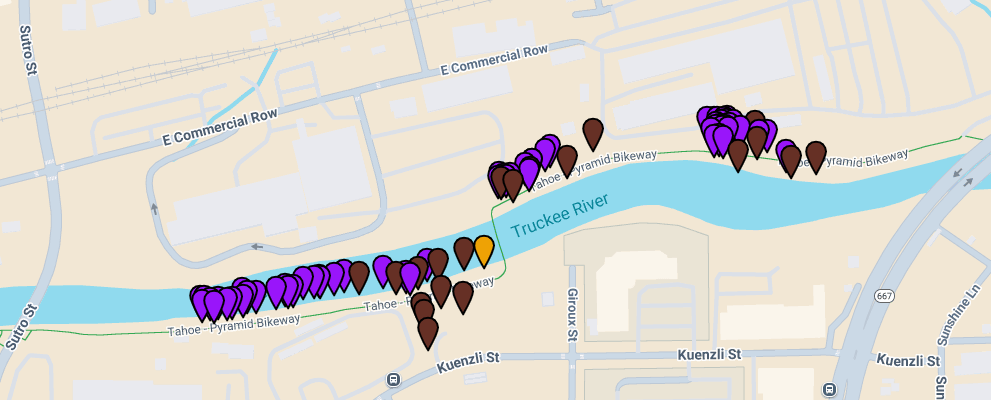
Workforce Program efforts from September to December 2024 along the Truckee River removing dead and declining trees (orange), removing invasive trees removed (purple) and protecting trees from beaver damage (brown).
Getting Started
With our Nevada Division of Forestry funding in place and two months preparing Program details, we launched our Workforce Program in September of 2024. To get started, we partnered with RISE and brought on Tara Tran, the Program Leader, to manage and train the Workforce crew. We began hiring our team of 5 crew members, all graduates of the Crossroads addiction treatment program and many with lived experiences with homelessness.
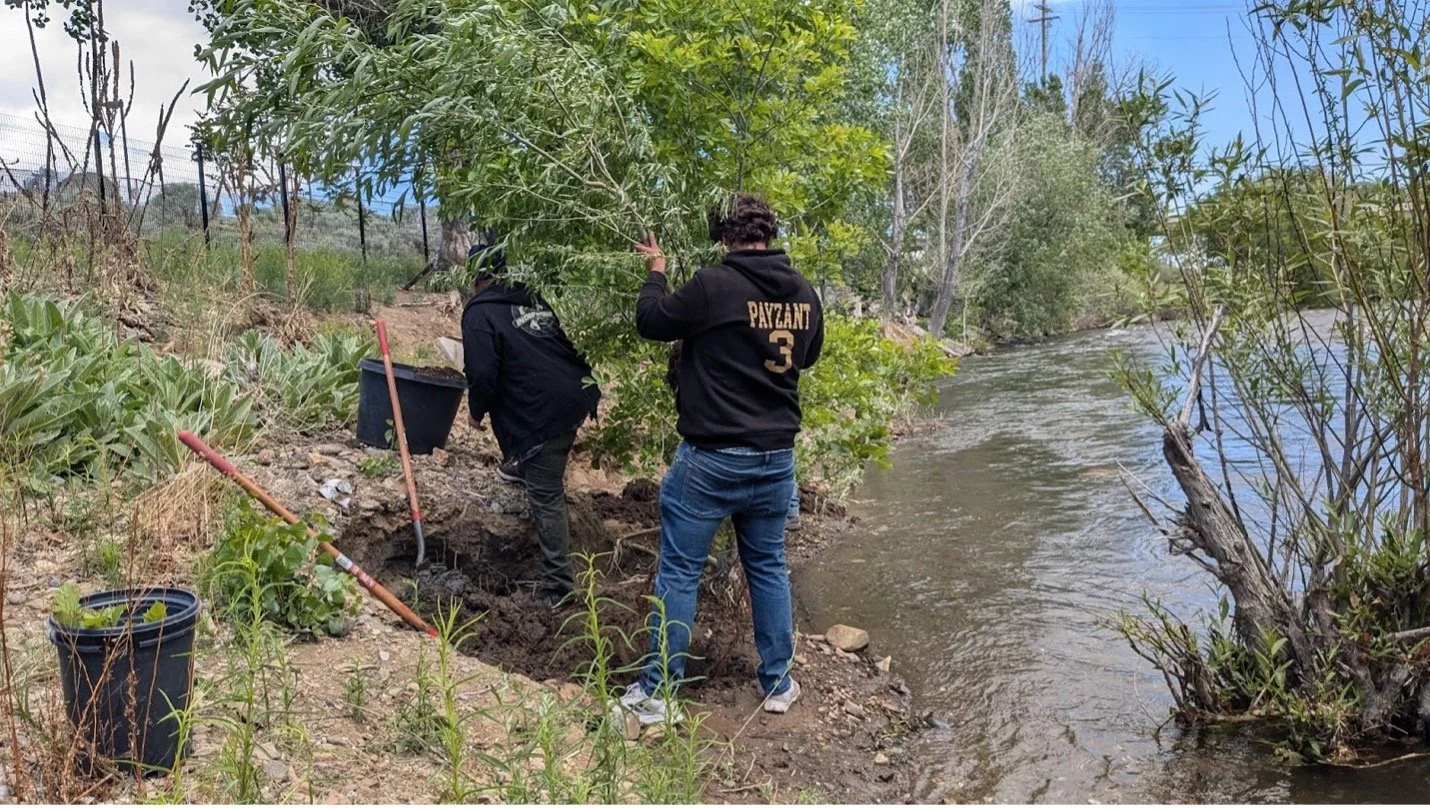
We began our training with education: teaching our crew about the Truckee River, our watershed, and how coordinated vegetation management has a positive impact on both the river and communities throughout our region. We took a field trip with the Truckee River Flood Management Authority, engaged in volunteer plantings with the City of Reno and KTMB, and started planting seedlings for future planting along the river.
Along the Truckee River, in 2024-25 we focused the majority of our efforts from John Champion Park to Fisherman’s Park II – manually removing invasive Tree of Heaven through treatment under the supervision of the City of Reno, and wrapping the trunks of mature native trees to protect them from beaver damage. In fall 2024, our work included removing 231 invasive trees, transplanting 106 trees, and protecting 44 trees from beaver damage.

Meet Tara Tran, who leads One Truckee River’s Workforce Program. Tara asks, “How do we look at these two different communities, environmentalists and unhoused individuals, that feel like they should be opposing and have them work together to find a solution that’s better for everyone?
OTR’s Workforce Program takes a practical approach to a really complicated issue, and I’m proud to be a part of it.”
Click here to read more about Tara.
Winter 2025
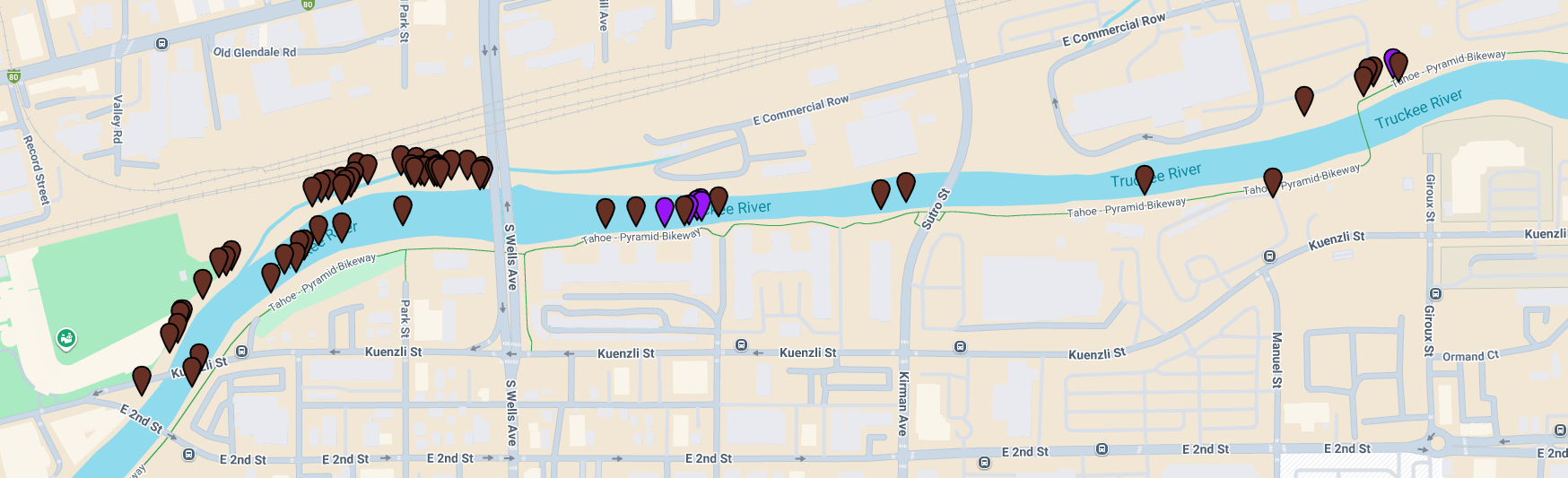
Workforce Program efforts from January to March 2025 along the Truckee River removing invasive trees (purple), protecting trees from beaver damage (brown).
Preparing for the Spring
While winter may appear quiet along the river, our crew keeps busy preparing for the season ahead. Last winter, they continued to work alongside the Truckee River, protecting 87 trees from beaver damage and removing 43 invasive trees.
On the educational side of the program, our crew participated in University of Nevada, Reno Extension training in Qualified Water Efficient Landscaper (QWEL), an EPA WaterSense labeled Professional Certification Program for irrigation system audits certifications. Crew members also participated in Restricted Use Pesticides applicators licenses training, an EPA-regulated certifications through the Nevada Department of Agriculture. Training prepares crew members to gain certifications that not only improve their work along the river but supports them upon Program completion - allowing them to stand out as more desirable job applicants.

Meet Ian Redinbaugh, a RISE staff member that supported the launch of the Program and is a Crossroads graduate himself shares how he learned through the Workforce Program about the importance of removing invasive trees along the Truckee River, to make room for native trees, their growth, and protect water quality and wildlife
Ian tells us, “More than anything, the Tree of Heaven is my new arch nemesis. Those things will sprout 50 trees off one root. They’re evil and must be stopped!”
Spring 2025
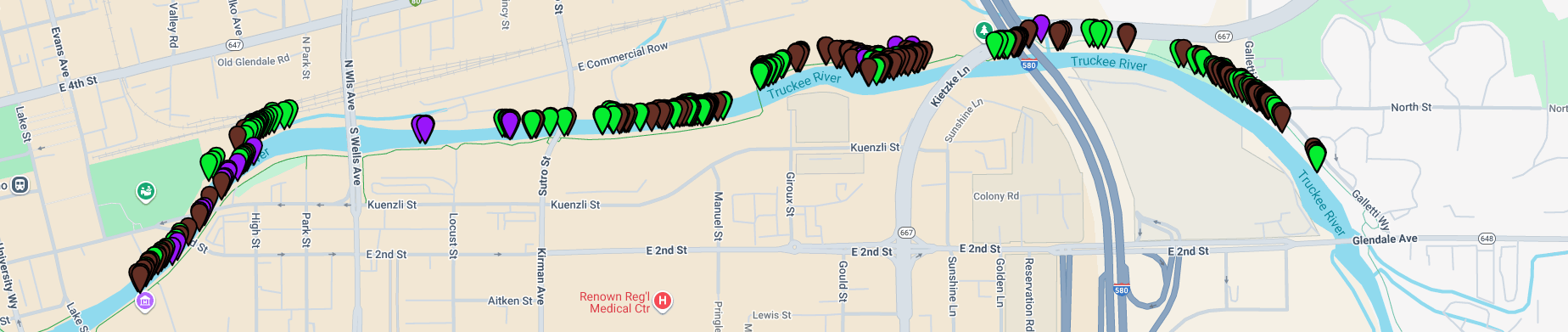
Workforce Program efforts from April to June 2025 along the Truckee River removing invasive trees (purple), reestablishing or newly planting native trees (green), trees protected from beaver damage (brown).
Planting Trees Along the Truckee River
With the weather warming up, our Workforce Program shifted their focus to planting trees along the Truckee River. After a trip to the Washoe State Tree Nursery to learn about native trees and how to care for them. After removing many invasive trees, the Workforce Crew began planting 261 trees – including cottonwood, willow, alder, and other native species – along the riverbank and riverside pocket parks, utilizing the time of year when water levels are high as “nature’s irrigation system.”
In addition, the crew collected 6-inch cuttings from cottonwood and willow trees growing along the Truckee River – since locally collected vegetation is known to contain genetics that have proven to be successful. They propagated these, under the supervision of City of Reno staff. From training in the winter, the crew was ready and tested for their QWEL certifications and Pesticide Applicator licenses, with seven team members achieving certifications. And, they removed 226 invasive trees and protected 195 mature native trees from beaver damage.
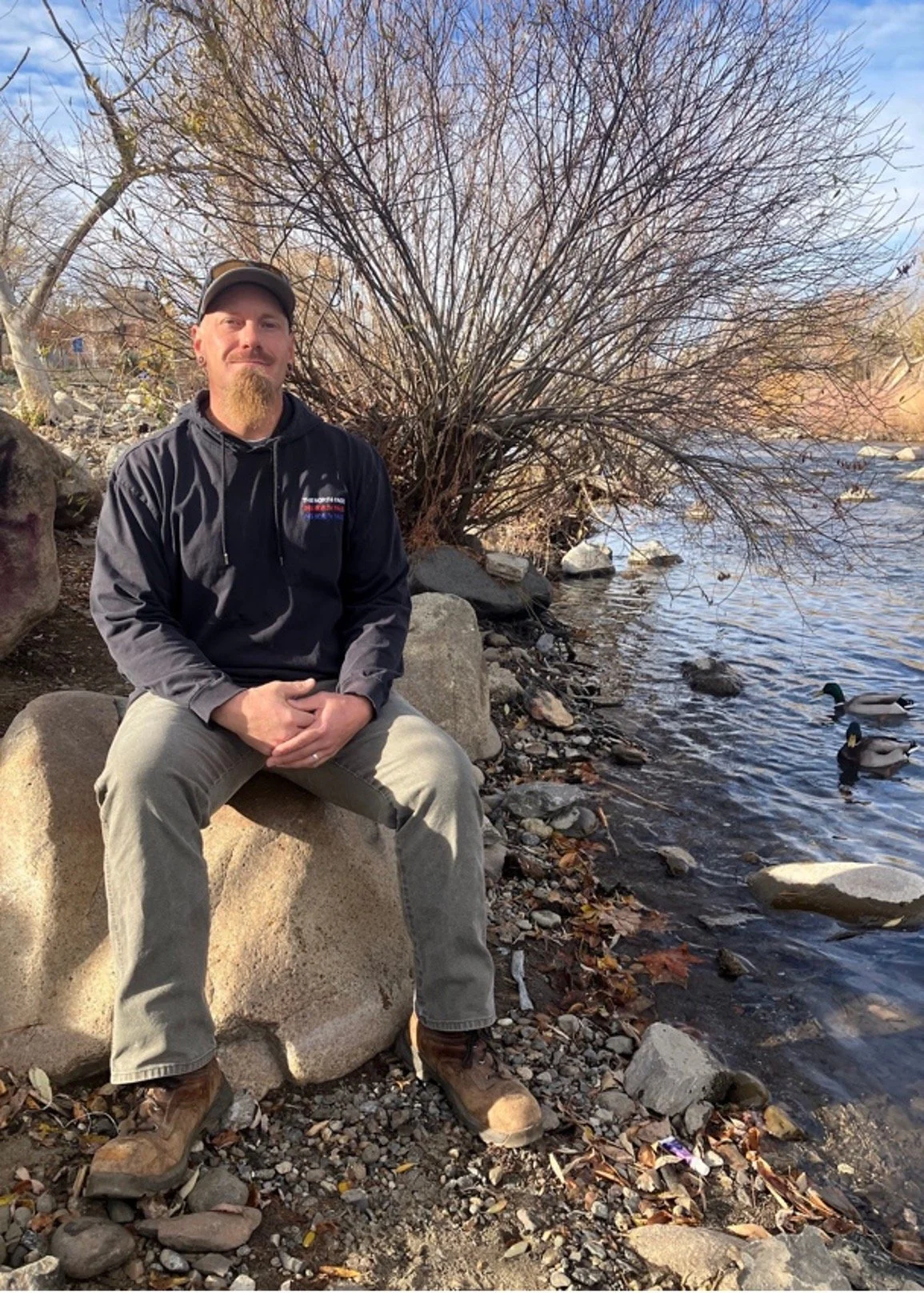
Meet our Tier Two Workforce Crew Member Anthony Reid, who’s been with the OTR Workforce Program since it was launched. Today, he helps the Program Leader train and manage the crew. Reid shares:
“It never ceases to amaze me what can happen, as long as you trust in the process and let the good things happen. I’m so grateful to One Truckee River and Crossroads for giving me my life back and helping me find myself again.”
Summer 2025
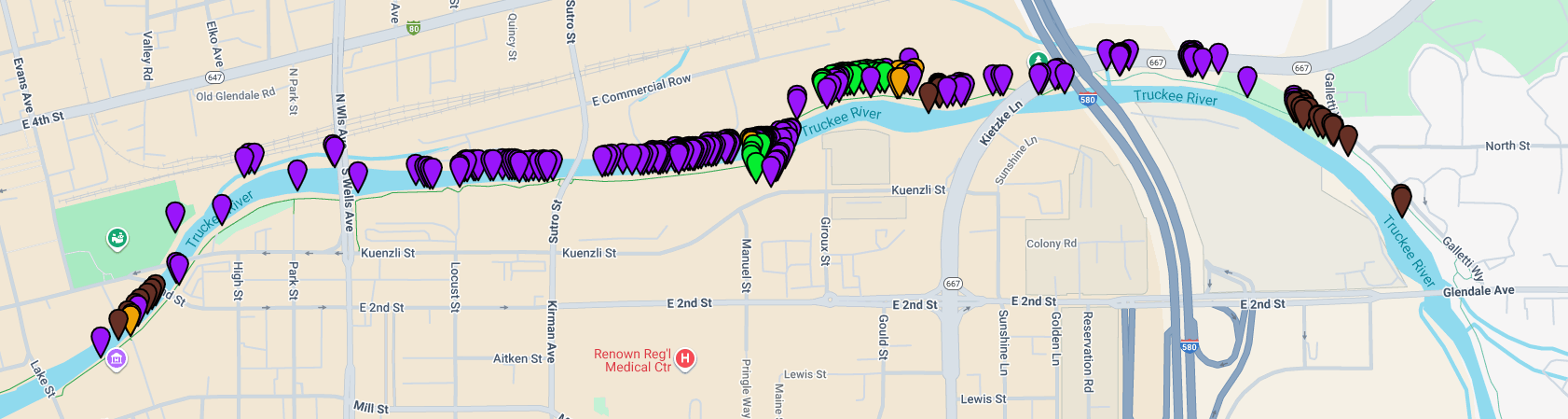
Workforce Program efforts from July to September 2025 along the Truckee River removing dead and declining trees (orange),removing invasive trees (purple), reestablishing or newly planting native trees (green), protecting trees from beaver damage (brown).
Improving Irrigation Systems
With River Network funding in place along with Nevada Division of Forestry funds, the Program was able to ramp up the Workforce crew’s efforts along the river. In John Champion Park and Fisherman’s Park II, irrigation systems needed improvements to increase shade for the river and enjoyment of residents in the parks. “By improving the irrigation system,” Tara Tran explains, “we both protected the dozen remaining fully grown trees and provided on the ground irrigation experience for our crew members, including allowing our crew to have creative input in the design and implementation of the improved irrigation system.” With additional irrigation capacity, we were able to plant over 100 new native trees in these two parks, including 56 trees planted in the time frame mapped above.
Because we planted native trees, if something were to happen to the irrigation system in the future, the trees would have better chances of surviving in our high desert environment. The crew also planted hundreds of native plants to stabilize the soil and support the success of the trees. These plants include native edible and medicinal plants. They provide habitat for birds and other wildlife. As a future project, we hope to add informational signs about these species.
And that’s just part of the One Truckee River Workforce Program’s summer achievements. Just as significantly, the crew continued treatment of Tree of Heaven (which requires several applications over different seasons of the year to prevent regrowth) and conducted manual removal of invasives with dense groupings of Siberian Elm - removing 820 invasive trees between July and September 2025 to open up space for beneficial native tree species to establish and thrive. The City of Reno Department of Urban Forestry instructed the crew in chainsaw safety and provided felling education. Finally, we welcomed our first community volunteer group, with Google employees working alongside our Workforce crew in June of 2025.
Fall 2025
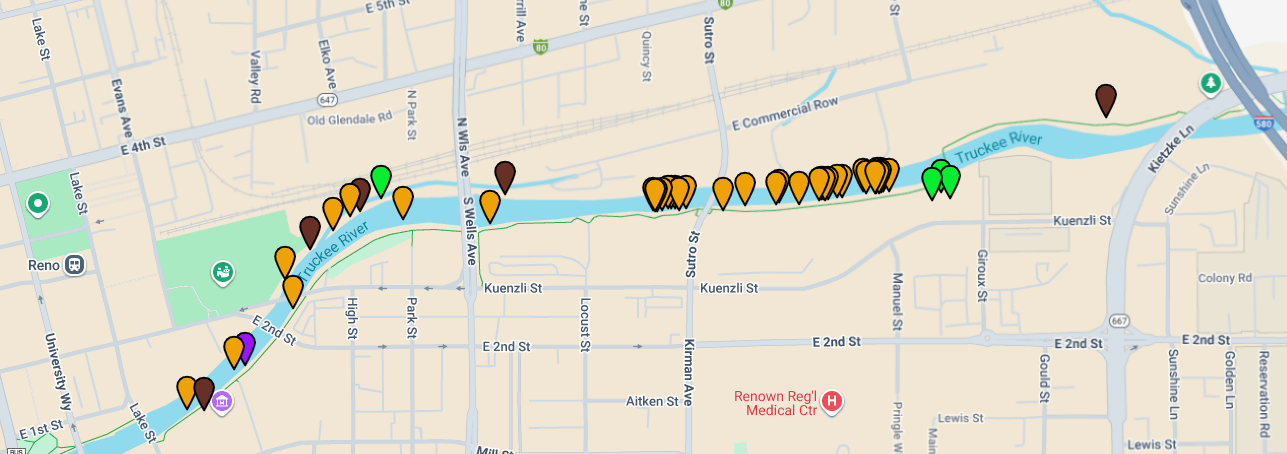
Workforce Program efforts from October to December 15, 2025 along the Truckee River removing dead and declining trees (orange), invasive trees removed (purple) many removed in clusters, reestablishing or newly planted native trees (green), protecting trees from beaver damage (brown).
Community Engagement, Preparing and Exploring Future Career Opportunities for Crew Members, and Removal of Dead and Declining Trees
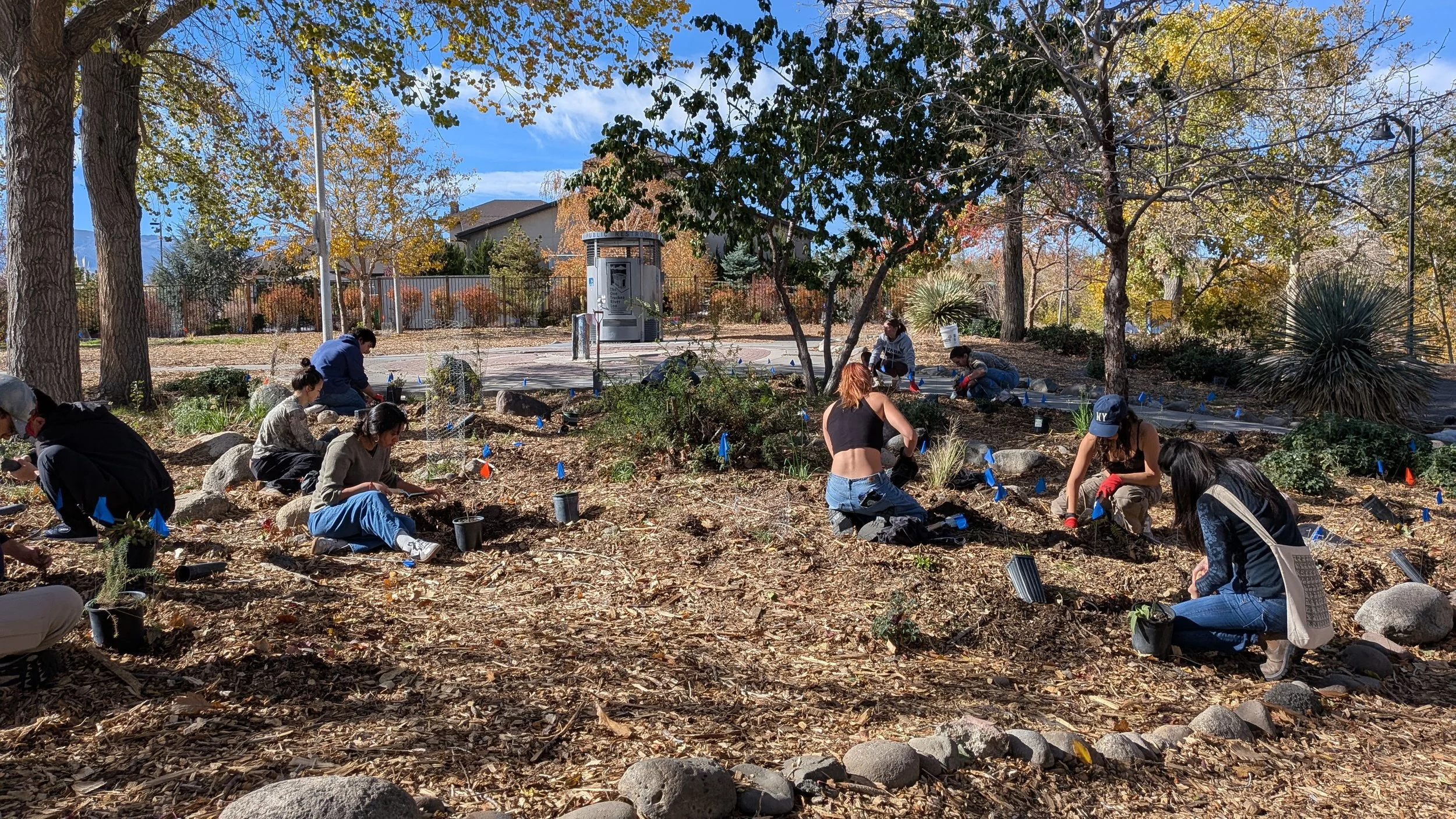
By late summer and early fall, after multiple treatments, many Tree of Heaven ceased to grow back. With safety measures in place, using chainsaws, the crew set to work removing these dead and declining trees, opening up more space to plant native trees. As we continued to plant trees, we invited community volunteers to participate in our work along the river. Tran notes, “the volunteer events were a wonderful way to bring the Workforce crew and larger community together in an impactful way. We were able to work with people who spend a lot of time along the Truckee River east of downtown Reno, educate attendees about tree care and wildlife habitat, and strengthen the community by working with a lot of different types of people successfully. This fall, the crew planted 65 trees, protected 88 trees from beaver damage, treated and removed 65 live invasive trees, removed 244 dead and dying trees, and seeded many additional native trees and plants. The new trees we planted included mountain mahogany, Alder, black elderberry, and valley oak.
Many crew members, after working throughout the seasons, are ready to pursue their next career opportunities. This fall, they learned more about native plants and other plant species that do well in the Truckee Meadows from Living with Fire, a program managed by UNR Extension. They participated in a live fire training, where they learned about defensible space and home hardening to protect homes and yards from wildlife damage. Tran is working with the crew to identify career paths and opportunities that align with each individual’s interests. They’re working on job search skills including resume and cover letter writing and interview preparation. While it’s too soon to know exactly where each crew member will land. At One Truckee River, we’re excited to continue to support our crew members (at the level of funding available) and be a part of their journeys as they build their new lives in recovery.
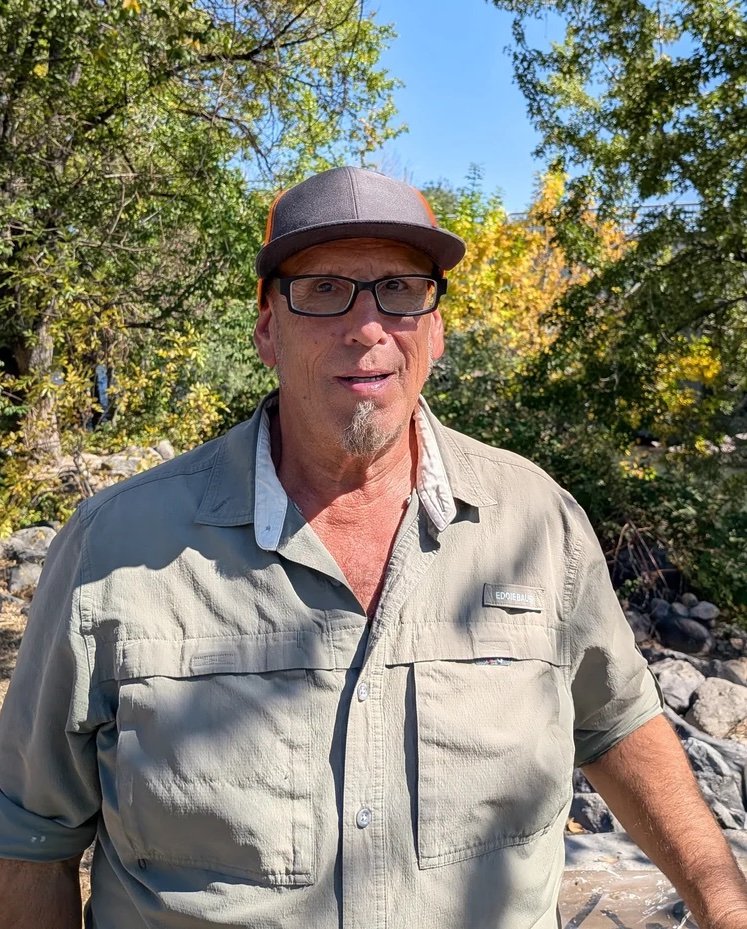
Learn about Joe Roybal and his experience as a One Truckee River’s Workforce Crew Member. Joe shares,
“When I was homeless, I lived by the Truckee River for a little while. It was a big resource. Now, I have an opportunity to give back what I got from the river – and I’m so grateful for it.”
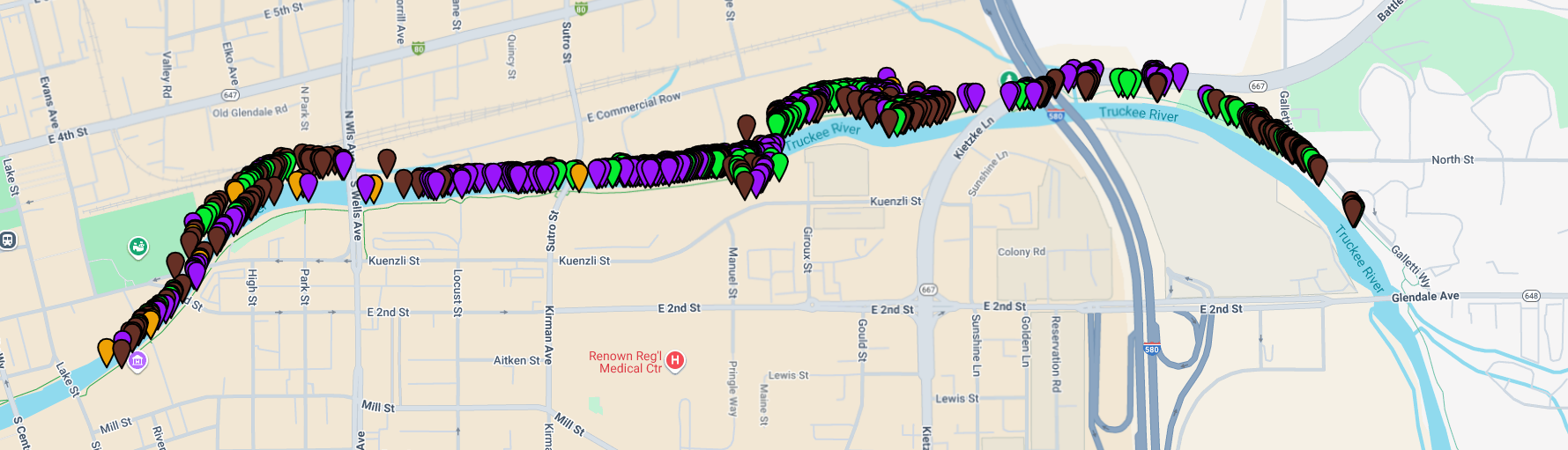
Workforce Program efforts from September 2025 to December 15, 2025 along the Truckee River removing dead and declining trees (orange), invasive trees removed (purple) many removed in clusters, reestablishing or newly planted native trees (green), protecting trees from beaver damage (brown).
Summing Up Our Workforce Program Accomplishments
In total, from September 1, 2024 to December 15, 2025, the One Truckee River Workforce Program has seeded 200 trees, planted or reestablished 382 native trees, transplanted 289 trees, protected 453 trees from beaver damage, removed 286 dead or dying trees, and removed 1,385 invasive trees. In addition, we have removed 404 pounds of green waste and 50 bags of litter from our worksite. The Workforce Program worked with 13 crew members overall that accomplished a total of 800.5 educational training hours gaining 20 certifications.
Do look for yourself! Check out the wildlife along the Truckee River east of downtown, and watch the newly planted native trees grow in.
What’s Next? - An Eye on 2026
After our first successful 16-months of operation, the Workforce Program at large has learned some valuable lessons and adjusted for program effectiveness along the way. The program’s leadership is in process of developing a draft monitoring plan and site weed management plan for review and guidance to the City of Reno and other local agencies.
Through the end of 2026, our funding is secure and we look forward to continuing to work with some current crew members. We’ll also bring on new crew members as some of our current team graduates. Beyond 2026, we strive to continue the Program if future funding becomes available.
Like what the Workforce Program Does?
Want to plant and care for trees with us along the river? Looking to get involved? We look forward to seeing you at one of our volunteer days or educational walks! Keep an eye on our events page for details – our next volunteer date is scheduled for April 11th.